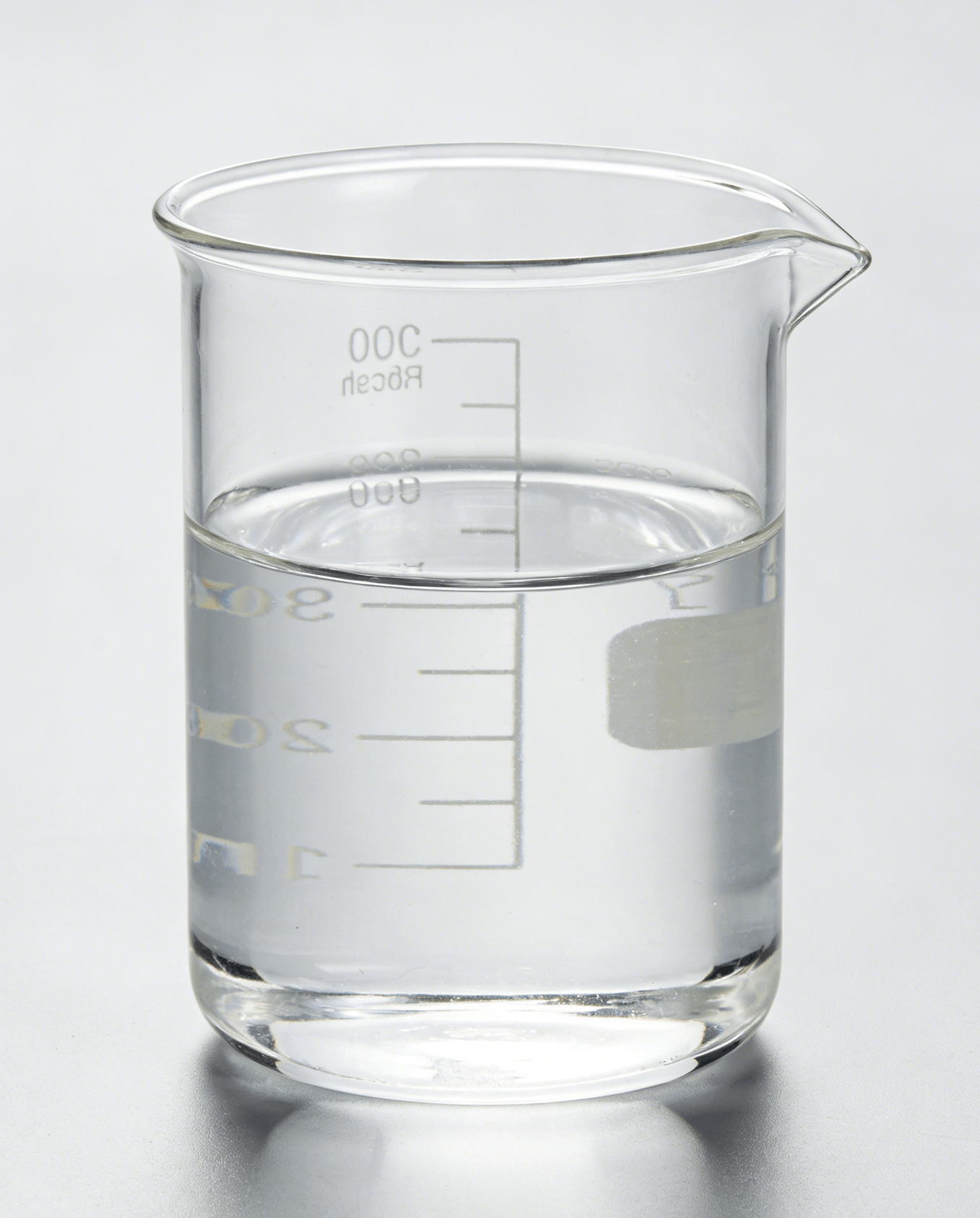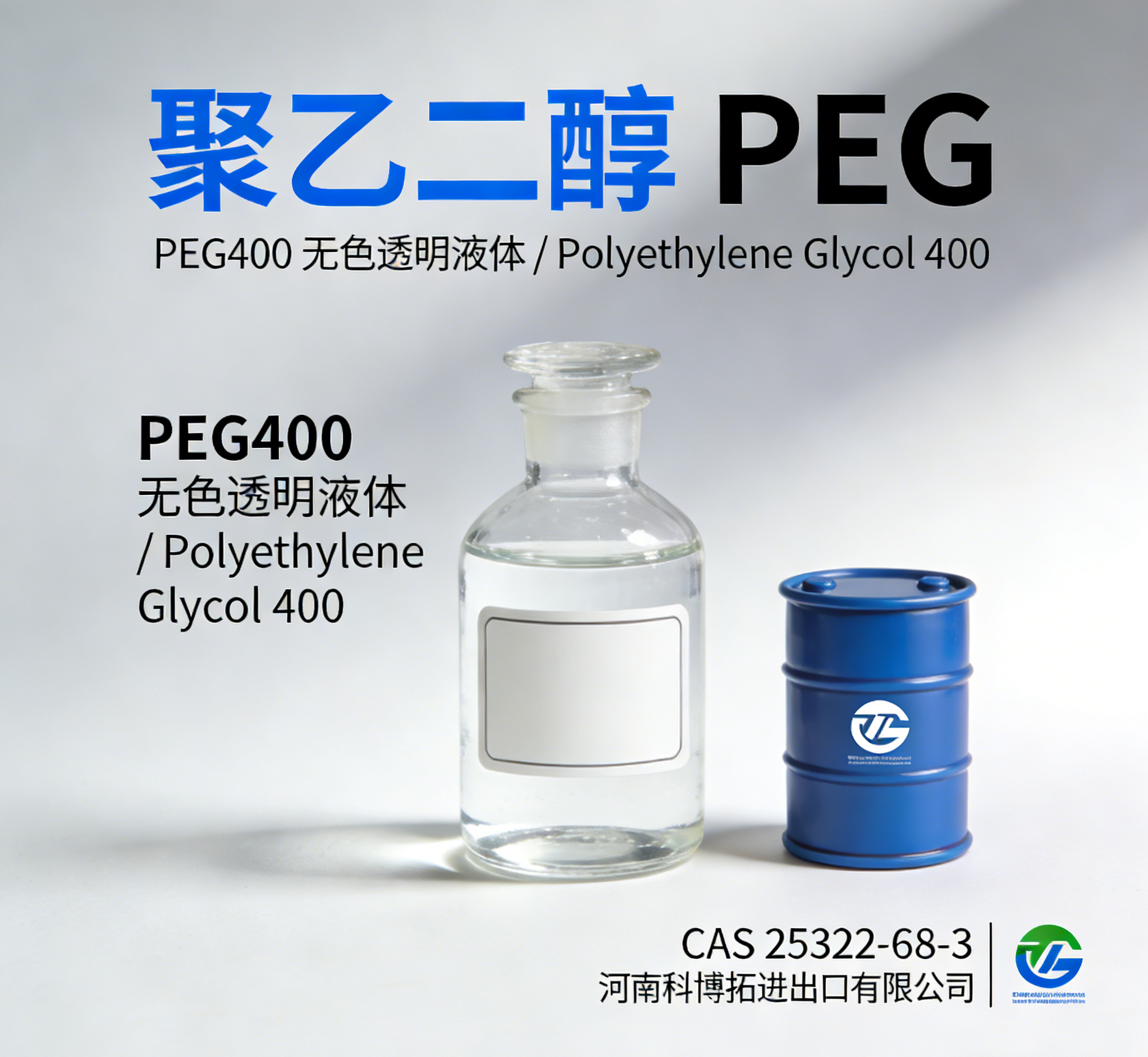
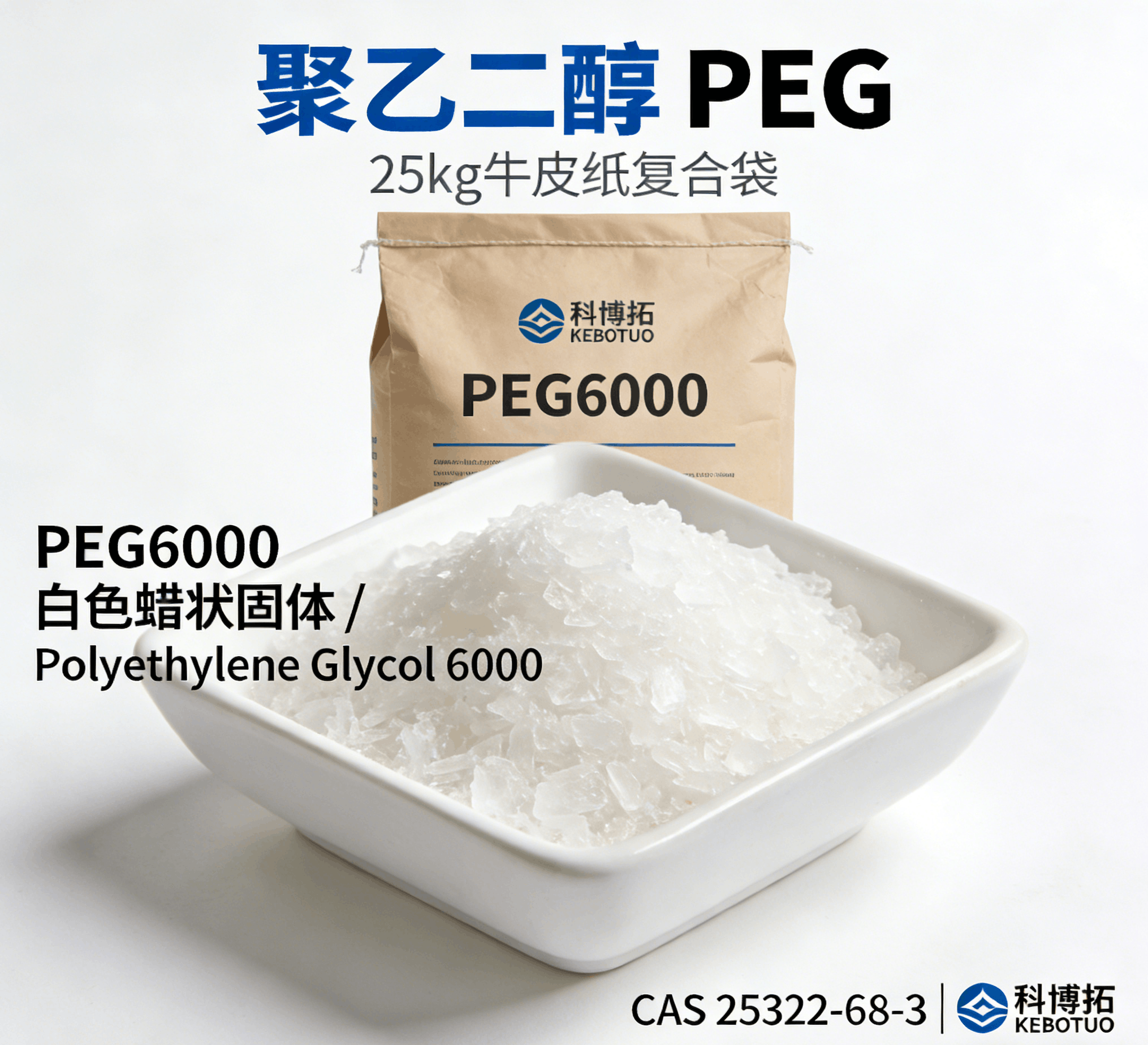
Polyethylene Glycol(PEG)
| CAS number | 25322-68-3 |
| Molecular formula | HO(CH₂CH₂O)ₙH |
| Molecular weight specifications | 200、400、600、800、1000、1450、3350、4000、6000、8000、10000、20000 |
Polyethylene glycol (PEG) is a water-soluble, non-toxic, and biocompatible polyether polymer compound with the general formula [formula missing]. Its physical properties vary with molecular weight (from 200 to 20,000+), and it exists in liquid, paste, and solid powder forms. Different molecular weights of PEG are suitable for different applications. Its core advantages are hydrophilicity, lubricity, solubilization, film-forming properties, and bioinertness. It is widely used in pharmaceuticals, daily chemicals, food, industry, textiles, and many other fields, and is a general-purpose functional raw material in the chemical industry.
The following are the core applications of PEG by industry, categorized by sector and indicating the mainstream applicable molecular weights for easy selection in practical applications:
I. Pharmaceuticals and Biopharmaceuticals (Core High-Value-Added Applications)
The biocompatibility and non-immunogenicity of PEG are key advantages in this field. Low, medium, and high molecular weights each have suitable application scenarios, which is also the main application direction for pharmaceutical-grade PEG.
Pharmaceutical Excipients
Solubilizers/Cosolvents: Low molecular weight PEG (200, 400, 600) is used in liquid formulations (injections, oral solutions, eye drops) of poorly soluble drugs (such as steroids, antibiotics, and traditional Chinese medicine extracts) to improve drug water solubility and bioavailability;
Ointment/Suppository Matrix: PEG4000 + PEG6000 (used in combination) is a water-soluble ointment matrix, easy to wash off, non-greasy, suitable for topical ointments and rectal/vaginal suppositories. Its melting point is close to body temperature, allowing for rapid drug release;
Tablet Binders/Disintegrants/Coating Materials: PEG4000, 6000, and 8000 are used as tablet binders to improve particle flowability; low molecular weight PEG is used as a coating plasticizer to make the coating film more flexible; it can also be used as a disintegrant for dispersible tablets to accelerate tablet dissolution.
Biopharmaceutical Modification (PEGylation): High molecular weight PEG (2000, 5000, 10000, 20000) is covalently linked to biopharmaceutical molecules such as proteins, peptides, antibodies, and enzymes (PEGylation technology). This can:
Extend the drug's half-life in vivo, reducing the frequency of administration;
Reduce the immunogenicity of biopharmaceuticals, preventing the body from producing antibodies;
Improve the water solubility and stability of drugs. For example, PEGylated interferon and PEGylated granulocyte colony-stimulating factor (G-CSF) are commonly used long-acting biopharmaceuticals in clinical practice.
Medical Devices and Materials:
Medical Lubricants: PEG200 and 400 are water-soluble lubricants used in medical devices such as urinary catheters and endoscopes, leaving no residue and not damaging mucous membranes;
Tissue Engineering Materials: PEG hydrogels have good biodegradability and cell compatibility, used for tissue repair, wound dressings, and sustained-release drug carriers;
Medical Coatings: PEG coatings modify medical implants (such as stents and artificial joints), reducing the risk of thrombosis and tissue rejection.
Isotonic aqueous solutions of PEG4000 and 6000 are used as bowel cleansers for pre-colonoscopy and surgical bowel preparation. They are not absorbed by the intestines, soften stool through hypertonicity, and provide gentle laxative effects with minimal impact on electrolyte imbalances.
II. Daily Chemicals and Personal Care (The Largest Consumer Application)
PEG is a basic raw material in daily chemical formulations. Different molecular weights are suitable for all categories of products, including cleansers, skincare, haircare, and shampoos. Its core functions are moisturizing, emulsifying, lubricating, and solubilizing.
Skincare Products
Moisturizers: Low molecular weight PEG (200, 400) can bind with water to form hydrogen bonds, locking in skin moisture, and is used in toners, serums, and lotions; medium molecular weight PEG (1000, 1500) serves as the base for moisturizing creams, balancing hydration and skin feel.
Emulsifiers/Solubilizers: PEG esters synthesized from PEG and fatty acids (such as PEG-40 stearate) are nonionic emulsifiers used in oil-in-water (O/W) lotions and creams to stabilize the formula; they also solubilize fragrances, essential oils, and fat-soluble active ingredients (such as vitamin E).
Hair Care Products
Shampoo/Conditioner: PEG acts as a lubricant and antistatic agent, reducing friction between hair strands, making hair smooth and easy to comb, and reducing static electricity; it also solubilizes fragrances and preservatives in the shampoo and stabilizes the lather.
Hair Mask/Treatment Mask: Medium to high molecular weight PEG (4000, 6000) acts as a film-forming agent, forming a thin protective film on the hair surface, reducing damage from perming and dyeing, and enhancing hair shine.
Face Cleansing and Cleansing Products
In facial cleansers and makeup removers, PEG acts as a solubilizer and emulsifier, quickly dissolving makeup and oils while gently cleansing and reducing skin irritation; in shower gels, it acts as a lubricating ingredient, improving the shower experience and preventing dry and tight skin.
Oral Care: PEG 400, 600 is used in toothpaste and mouthwash as a moisturizer and solubilizer, preventing toothpaste from drying out and solubilizing menthol and other cooling agents to improve taste.
III. Food and Food Additives Sector
Food-grade PEG (must comply with national standard GB 29216) is a non-toxic and odorless raw material, mainly used as a food processing aid, humectant, anti-caking agent, and release agent. Its use is limited to PEG with a molecular weight ≥ 4000 (low molecular weight PEG is prohibited for use in food).
Food Processing Aids
Mold Release Agents: PEG4000 and 6000 are used for releasing pastries, candies, and baked goods, replacing traditional oils, providing good release, leaving no greasy residue, and being easy to clean.
Anti-caking Agents: Used in powdered foods (such as milk powder, protein powder, and seasonings) to prevent the powder from absorbing moisture and clumping, improving flowability.
Humectants: Used in baked goods such as bread, cakes, and mooncakes to lock in moisture, delay food aging and hardening, and extend shelf life.
PEG can be compounded with other polymers to create water-soluble coatings for food packaging, improving the barrier properties (oxygen and water resistance) of the packaging. The coating is also biodegradable and meets environmental protection requirements. It can also be used as a preservative coating for fruits and vegetables to reduce moisture loss.
Application field
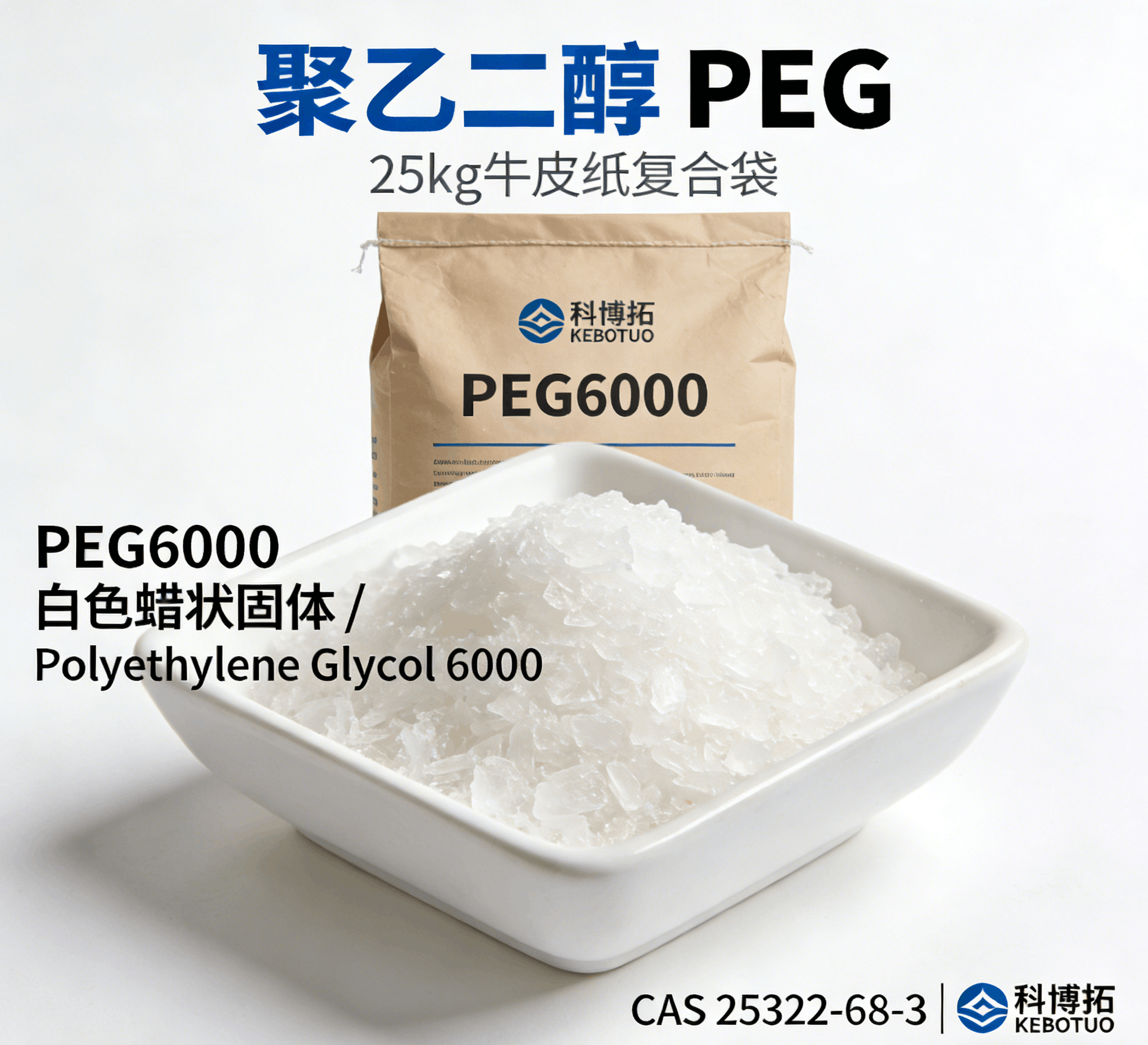
Polyethylene Glycol(PEG)
1,2-Propanediol(PG)
1,2-Propanediol(PG)