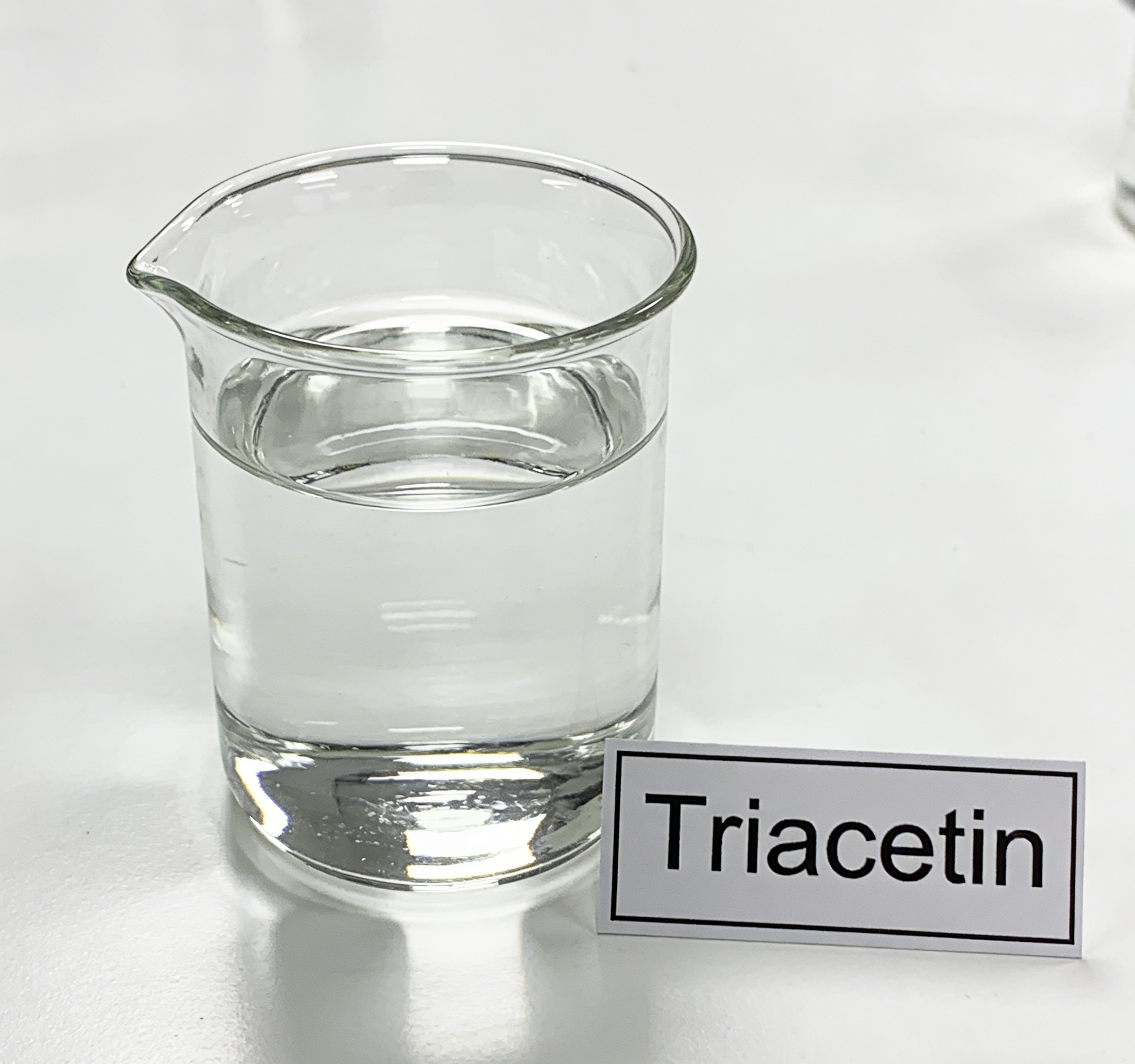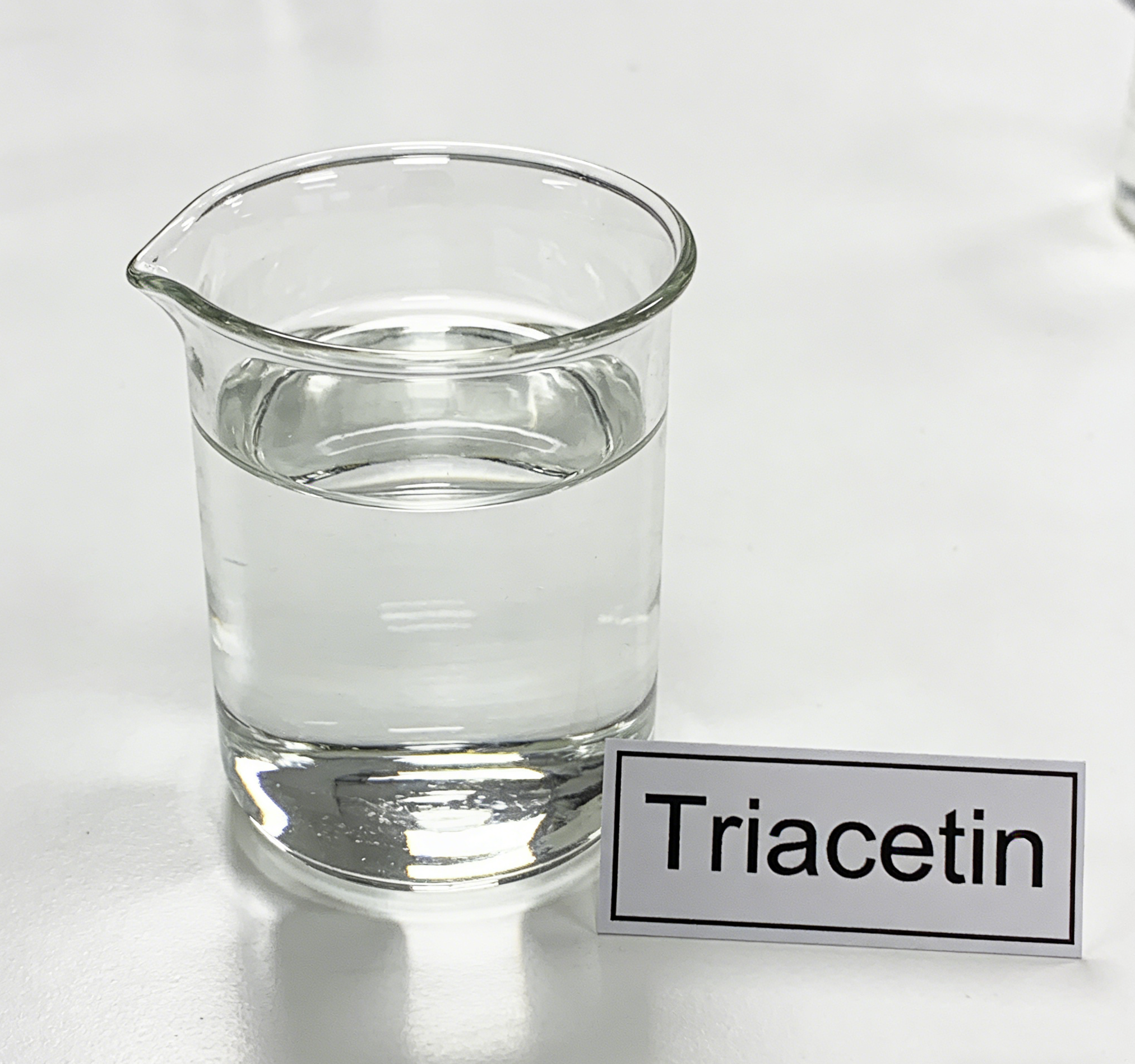
Triacetylglycerol
CAS number: 102-76-1
Molecular formula: C₉H₁₄O₆
Product Alias: Triacetin、Glycerol triacetate、Glyceryl triacetate、1,2,3-triacetoxypropane、1,2,3-triacetylglycerol
Triacetin (CAS 102-76-1) Core Uses: Triacetin is a non-toxic, odorless, and highly compatible polyol ester compound. It possesses plasticizing, solvent, flavor-fixing, and film-forming properties, and meets food and pharmaceutical safety standards. It is widely used in food, pharmaceutical, daily chemical, chemical, and rubber and plastics industries, and is a commonly used multifunctional additive in export chemical raw materials.
I. Food Industry:
* Food-grade plasticizer/softener: Used in the gum base and coating of chewing gum, candy, and baked goods to improve flexibility, prevent brittleness, and improve taste.
* Food solvent/carrier: Dissolves food flavorings, colorings, antioxidants, etc., ensuring uniform dispersion of additives. It can also be used as a food release agent and lubricant.
* Low-calorie fat substitute: Used in the formulation of low-fat foods and meal replacements to reduce calories while maintaining good taste.
II. Pharmaceutical & Cosmetic Industry
Pharmaceutical Excipients: Used as plasticizers and film-forming agents in oral medications (capsules, tablets) to improve coating flexibility and prevent cracking. They can also be used as solvents/co-solvents in injections and ointments to increase drug solubility.
Cosmetic Raw Materials: Used in perfumes, balms, creams, lipsticks, etc., as fixatives (to prolong fragrance retention), plasticizers (to improve the smoothness of the paste), and solvents (to dissolve fragrance and wax components).
Oral Care: Added to toothpaste and mouthwash to improve formula compatibility, enhance taste, and assist in fixing fragrance.
III. Rubber, Plastic & Coating Industry
Environmentally Friendly Plasticizers: Used in resins such as cellulose acetate (CA), nitrocellulose (NC), and polyvinyl chloride (PVC) as primary/auxiliary plasticizers, replacing some phthalate plasticizers to improve the flexibility and film-forming properties of products. Suitable for soft plastics, films, and coatings.
Coating/Ink Solvents: Used in nitrocellulose lacquer, varnish, and printing inks as co-solvents to improve leveling, reduce viscosity, and enhance film gloss. Also used as film-forming aids in inks.
Rubber Softeners: Used in the processing of natural and synthetic rubber to improve the plasticity and processing performance of rubber without affecting the weather resistance of rubber products.
IV. Other Industrial and Laboratory Uses
Tobacco Industry: Used as a plasticizer in cigarette filters to improve their elasticity and formability; a common auxiliary agent in the tobacco industry.
Textile Industry: Used for waterproofing and softening fabrics; also used as a solvent for dyes to improve dyeing uniformity.
Laboratory Reagents: Used as a solvent and reaction medium in organic synthesis; also used as an auxiliary agent for performance testing of plastics and resins.
Lubricants/Defoamers: Used in small quantities as lubricants in machining processes and as defoamers in water-based systems; exhibits good compatibility and leaves no residue.
Application field